
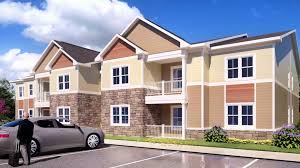
Pocono Review pulled the tax filings, traced the money, and found the story no one else is telling about Timber Mill Commons.
EDITOR’S NOTE — April 28, 2026
Since publishing this investigation on April 23, Pocono Review has obtained Housing Task Force meeting minutes, traced grant money through multiple organizations, and mapped a web of undisclosed relationships connecting the developer, its attorneys, county and borough officials, the property seller, and the general contractor — including overlapping board seats, family business ties, and dual roles that have never been disclosed to the public.
We have sent detailed, sourced questions to 17 individuals and organizations connected to this project. We are awaiting responses to make sure we have every side and every fact right. “It’s a big club, and you ain’t in it.” – George Carlin
HONESDALE, WAYNE COUNTY — A $22 million apartment complex is coming to Commercial Drive. The nonprofit building it is from Scranton. Every person on its board and leadership team lives in Lackawanna County. They’ve never built anything in Wayne County. And there is nothing in the federal program funding it that requires a single one of the 42 tenants to be from here.
The detail matters, because Wayne County residents are the ones who’ll absorb the consequences — higher tax assessments on surrounding homes, a potential reduction in what the borough collects from six acres of land, new demand on a municipal infrastructure that’s already stretched thin, and a 30-year pipeline of rent money flowing to an organization 40 miles away.
WNEP gave it 90 seconds. The River Reporter covered a meeting. Neither named the people behind the project, explained how the money works, or asked whether anyone local had a say.
We did.
Who Gets to Live There?
UNC’s housing director Joy Hubshman told WNEP the project is “designed for people that want to live and work in Honesdale.” That’s a quote for television. It’s not a legal commitment.
The project runs on the Low-Income Housing Tax Credit, or LIHTC. The only eligibility requirement is income — below 60 percent of area median, roughly $35,500 for a single person in Wayne County. There is no residency requirement. Someone who’s lived in Honesdale for 40 years and someone who moved from out of state last month are equally eligible.
Most LIHTC developers skip local preferences in their tenant selection plans because of Fair Housing Act complications. The program also requires accepting Section 8 voucher holders, and those vouchers are portable across county lines.
UNC’s entire marketing operation, waitlists, and tenant pipeline sit in Lackawanna County. When Timber Mill Commons opens, who hears first — their existing Scranton waitlists, or Wayne County workers?
The tenant selection plan, which UNC writes, determines priority. It hasn’t been made public. Whether UNC will commit to a Wayne County preference hasn’t been asked.
Every Name — and Where They’re From
The developer is United Neighborhood Community Development Corporation (UNCDC, EIN: 20-4181020), the housing arm of United Neighborhood Centers of Northeastern Pennsylvania (UNC, EIN: 24-0795389). Headquarters: 526 Cedar Avenue, Scranton.
Lisa Durkin, CEO — $159,539/year (IRS Form 990, filed February 2026). Carbondale native. Lives in Carbondale. At UNC since 1998.
Martin Fotta, COO — $117,323. Marywood University, Scranton. Presented the Timber Mill plan at the May 2025 Honesdale meeting.
Joy Hubshman, Housing Development Director. Jill Moyle, Real Estate Management Director (830 Crown Ave., Scranton). Mike Tolerico, CFO. All Scranton-based.
Twenty-five unpaid board directors. Chair Jude McDonough. Members include Judge Terrence Nealon (Lackawanna County bench), Attorney Andrew Hailstone (Kreder Brooks Hailstone LLP, Scranton), Dr. Jennifer Joyce (Geisinger Commonwealth), Dr. Marwan Wafa (Penn State Scranton), Dr. Kellyn Williams (Johnson College, Scranton), John Bogdanovich (PA Legal Services), James Caffrey, Benjamin Tolerico, Dr. Daniel Ginsberg, Amy Hlavaty Belcher, Teresa Lacey, Thaddeus Kenny, Gail Waters, Maureen Brennan, Elizabeth Burns, Kevin Rodgers, Charlotte Kearney, Bernard McGurl, Meegan Possemato, Brittani Hamer, Joseph Calabro, and Kristen Shemanski.
Not one lives or works in Wayne County.
The only local names attached: Rep. Jonathan Fritz (R-111), who secured $400,000 in state acquisition funding; Heather Mizler and Justin Taylor from the Wayne Tomorrow! Housing Task Force; and property seller Roger Dirlam. Wayne County identified the problem. Lackawanna County is collecting the check.
About that $400,000. Fritz’s office routinely issues press releases naming the exact program, dollar amount, and recipient for state grants — from $20,000 little league renovations to a $500,000 Vine Street stormwater grant announced just months ago. For this allocation to a Scranton nonprofit that’s never operated in Wayne County, there’s been no press release, no named state program, and no public record of the application or approval process. Hubshman credited Fritz on camera. That’s the only documentation that exists. Meanwhile, the far larger LIHTC allocation — the bulk of the $22 million — will be decided by the Pennsylvania Housing Finance Agency through a competitive process that hasn’t concluded. That means there’s still time for Wayne County residents to weigh in before the real money is locked in.
Never Built Here. Running Two at Once.
UNCDC’s entire portfolio — Amos Towers, Bucktown Center, Cabrini, Cedar Point, Fallbrook, Harriet Beecher Stowe, Hitchner, Old School on Luzerne, Webster Towers, Willow, Madison Avenue — sits in Scranton, Carbondale, Dunmore, and West Pittston. One senior building in Jim Thorpe is the lone outlier. Wayne County? Zero units. Timber Mill Commons would be their first.
They’re also running a $22.5 million, 41-unit LIHTC complex on Capouse Avenue in Scranton’s Pine Brook neighborhood — zoning approved February 2025. Two projects, $44.5 million, same tax credit pool.
Lackawanna County Commissioner Bill Gaughan has spoken at multiple UNCDC groundbreakings, standing alongside Durkin and Fotta. He’s the same commissioner who pushed through Lackawanna’s first reassessment in 58 years — one that doubled some homeowners’ county tax bills — while UNC’s LIHTC properties operate under arrangements that shield them from the same hit.
Where Your Money Goes
UNCDC applies to the Pennsylvania Housing Finance Agency for tax credits, then sells them to corporate investors — banks — who use them as dollar-for-dollar federal tax write-offs over 10 years. The bank puts up construction equity in exchange for a risk-free investment. Investors won’t be named until the limited partnership forms.
What flows to UNC’s network on a $22 million deal:
Developer fee — 10 to 15 percent of project costs is standard: $2.2 to $3.3 million to UNCDC. Part deferred, paid from rental income over 15 years. Deferred means later, not never.
Management fees — 6 to 8 percent of gross rent. Forty-two units at ~$900/month averages roughly $30,000/year to UNC, approaching $1 million over 30 years before rent increases.
Legal fees — Board member Hailstone’s firm, Kreder Brooks Hailstone LLP, served as counsel on UNCDC’s Bucktown Center. The board seat is unpaid. The legal work isn’t.
Executive pay — Durkin’s compensation nearly doubled in five years, from $84,000 to $159,539.
Construction — Previous projects used Lackawanna County contractors: Mar-Paul Construction, Grimm Construction. Whether Wayne County firms see any of this work hasn’t been discussed.
Tenants get below-market rent. That’s real. But they build zero equity, own nothing, and face market-rate rents when the compliance period expires in 15 to 30 years.
The Question Nobody Asked
What if those six acres had been subdivided instead? Twenty-five lots. Roads, water, sewer. Sold at $30,000 to $40,000 to local families. Modular homes. Duplexes.
Homeowners building equity instead of rent checks leaving the county. Full property tax on every parcel. Families with something to pass on. A family that buys a $35,000 lot and puts a $120,000 modular on it owns $155,000 in 15 years with real equity built.
Under the LIHTC model, that same family is still renting — and when the compliance window closes, rent goes up.
The complications are real. Infrastructure costs money. Not everyone qualifies for a mortgage. But the question is whether anyone in Wayne County raised it, or whether a Scranton nonprofit walked in with the LIHTC playbook and everybody nodded.
The Problem Is Real. This Doesn’t Match It.
Wayne County’s housing data checks out. Home prices jumped 60 percent between 2017 and 2022. Median income is $59,240. Rental vacancy is around 1 percent.
But 73.5 percent of home purchases by the first half of 2022 were by non-owner occupants — investors, vacation buyers, short-term rental operators. Three out of four homes went to people who don’t live here. That’s the cause. Forty-two apartments managed from Scranton treat a symptom.
What It Does to Your Taxes — and Your Town
LIHTC developments raise surrounding property values — Georgia Tech found 3.2 percent, UT Dallas found 2.1 percent. After Wayne County’s 2022 reassessment jumped assessed values from $5.9 billion to $9.26 billion, a third of homeowners already saw increases. A $22 million complex replacing a lumber yard will push assessments again for every property on and around Commercial Drive.
LIHTC properties often negotiate PILOT agreements — reduced tax payments — meaning the borough and Wayne Highlands School District could collect less from six nonprofit-controlled acres than from the same land with individually owned homes. Whether a PILOT is part of this deal hasn’t been disclosed.
Then there’s the strain on services nobody’s accounting for. Honesdale Borough doesn’t have the infrastructure of Scranton. Forty-two new households means more calls to a police department that covers the borough with a handful of officers. More demand on Wayne Memorial Hospital’s emergency services. More cases flowing through a court system that already runs lean. More kids entering the Wayne Highlands School District. More wear on roads the borough already can’t afford to maintain after last year’s flooding wiped out stormwater infrastructure the borough publicly said it doesn’t have money to fix.
UNC’s plan includes an on-site services coordinator to connect tenants with county resources. But county resources aren’t unlimited. The Wayne County Housing Authority manages 715 vouchers across two counties. Wayne County Human Services, the Area Agency on Aging, the court system — these are small-county operations built for a small-county population. Adding 42 households of tenants who may have no prior connection to the community creates demand on systems that are already at capacity.
Nobody at the May 2025 public meeting presented a services impact analysis. Nobody quantified what Timber Mill Commons costs the borough and county in added demand versus what it contributes in tax revenue — especially if that revenue is reduced by a PILOT.
Show Us the Record
If the Housing Task Force evaluated homeownership models, show Wayne County the analysis. If Borough Council shaped this project, show us the minutes. If the commissioners weighed in, put it on record.
If none of that exists — if this was designed entirely by people from another county, funded by a program built for corporate investors, with no residency requirement and no accounting for the strain on local services — Wayne County deserves to know before a shovel touches the ground.
TIMBER MILL COMMONS — FULL RECORD
Location: 1 Commercial St., Honesdale (Dirlam Brothers Lumber yard)
Developer: UNCDC (EIN: 20-4181020), subsidiary of UNC (EIN: 24-0795389). 526 Cedar Ave., Scranton, PA 18505.
Personnel (FY2025 Form 990): Lisa Durkin, CEO — $159,539 | Martin Fotta, COO — $117,323 | Joy Hubshman, Housing Dev. Director | Jill Moyle, Real Estate Mgmt. Director | Mike Tolerico, CFO
Board chair: Jude McDonough. Full board in article.
UNC financials (FY2025): Revenue $12.17M | Expenses $9.98M | Assets $13.5M | Liabilities $3.33M — ProPublica Nonprofit Explorer
Units: 42 (14 one-bed, 18 two-bed, 10 three-bed). Four residential buildings, one community building. Nine handicap-accessible.
Cost: $22M. LIHTC-funded. $400K state acquisition via Rep. Fritz (specific state program not publicly identified). Gap funding sought. LIHTC allocation pending PHFA competitive review.
Developer fee (est.): $2.2M–$3.3M (10–15% standard).
Rents: Below market, ≤60% AMI. Not income-based. No residency requirement. Tenant selection plan not public.
Timeline: Construction expected 2028.
Simultaneous project: $22.5M, 41 units, 601 Capouse Ave., Scranton. Approved Feb. 2025.
Seller: Roger Dirlam, Dirlam Brothers Lumber Co. (est. 1943).
Ask your officials:
Wayne County Commissioners — 570-253-5970
Honesdale Borough Council — 570-253-0731
Wayne Highlands School District — 570-253-4661
Rep. Jonathan Fritz — 570-253-2685
UNC/UNCDC (developer) — 570-346-0759
PA Housing Finance Agency (LIHTC allocator) — 855-827-3466
Read Part II: Timber Mill Commons: The Mayor Knew. Mayor Derek Frey Williams attended task force meetings where UNC disclosed its plans — then asked commissioners to approve a supporting study without mentioning any of it.