
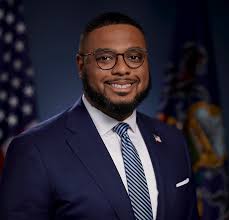
STROUDSBURG, PA — As Pennsylvania doubles down on its strategy to curb violence before it erupts, Lieutenant Governor Austin Davis heads to Monroe County Monday with a message that’s backed by millions in new funding: prevention works, and the state is betting bigger on it.
The visit marks a pivotal moment for local safety advocates who’ve long argued that stopping violence requires more than just policing—it demands intervention, partnership, and sustained investment in communities themselves.
Davis will convene a roundtable of law enforcement leaders, health officials, and community organizers at 10 a.m. inside the Monroe County Administrative Center to discuss how the freshly signed 2025-26 state budget is reshaping Pennsylvania’s approach to public safety.
The Numbers Behind the Strategy
Governor Josh Shapiro’s budget delivers a 10 percent funding surge for the Violence Intervention and Prevention program, a proven initiative that puts resources into neighborhoods grappling with gun violence. The increase signals growing confidence in a model that catches potential violence early—before shots are fired, before lives are shattered.
But the administration isn’t abandoning traditional law enforcement. The budget also funds four additional Pennsylvania State Police cadet classes, expanding the force’s capacity to respond when prevention efforts alone aren’t enough.
It’s a two-pronged approach: intervene early, respond effectively.
Where Policy Meets the Street
Monday’s conversation won’t happen in a vacuum. Joining Davis around the table will be Monroe County Commissioner John Christy, District Attorney Mike Mancuso, and representatives from the Pennsylvania Department of Health and the state’s Office of Gun Violence Prevention.
What makes this roundtable different is who else has a seat: grassroots organizations SAFE Monroe and Monroe County’s Community Partnership for Gun Safety. These are the groups doing the unglamorous work—mentoring at-risk youth, organizing neighborhood watch programs, and building trust in communities where it’s been eroded.
Their presence underscores a philosophy shift in Harrisburg. The Shapiro administration has embraced the reality that badges and budgets alone won’t solve gun violence. Real change requires collaboration between government and the organizations already embedded in affected communities.
Strengthening the Thin Blue Line
The investment in State Police cadet classes addresses a pressing reality facing law enforcement nationwide: departments are stretched thin. Recruitment has become a challenge, retention even more so. These four additional classes will inject fresh personnel into a system that’s been strained for years.
For communities across Pennsylvania, that means more troopers available to respond to emergencies, investigate crimes, and maintain a visible presence that deters violence. It’s the kind of foundational investment that doesn’t generate headlines but makes daily life safer for thousands.
A Track Record of Showing Up
Davis has made community safety a cornerstone of his work as lieutenant governor, regularly traveling to cities and towns across Pennsylvania to spotlight violence prevention efforts. Monday’s visit to Stroudsburg continues that pattern—bringing state attention to local partnerships and putting a spotlight on funding that might otherwise go unnoticed.
For Monroe County, the visit represents both recognition and opportunity: recognition that the county’s collaborative approach to gun violence prevention aligns with state priorities, and opportunity to deepen those partnerships with expanded resources.
The roundtable takes place in Room 203 at the Monroe County Administrative Center, 1 Quaker Plaza, Stroudsburg. Media planning to attend must RSVP to Kirstin Alvanitakis at kirstinalv@pa.gov.
As Pennsylvania charts its course on public safety, Monroe County finds itself at the center of a larger conversation about what actually works to protect communities—and what it costs to do it right.
The Violence Intervention and Prevention program operates in communities throughout Pennsylvania. More information is available through the Pennsylvania Department of Health.
Leave a Reply
You must be logged in to post a comment.